
Most people don’t trust AI.
And honestly, can you blame them?
You get an answer from your bot, but you have no idea how it came up with it. It’s like talking to a genius who refuses to explain their thought process.
Now, here’s the good news: Neurosymbolic AI is changing that in 2025.
Think of it this way—traditional AI is great at spotting patterns. That’s why Netflix knows your next favorite show before you do. But it struggles to explain why it made that choice.
Neurosymbolic AI fixes this. It doesn’t just predict. It reasons. It connects the dots. It gives you the “why” behind the decision.
The result? Smarter, more transparent, more trustworthy AI. An AI that feels less like a black box and more like a business partner.
And if you’re wondering how this impacts you… keep reading. You’ll see why this could be the biggest leap in AI yet.
What is NeuroSymbolic AI?
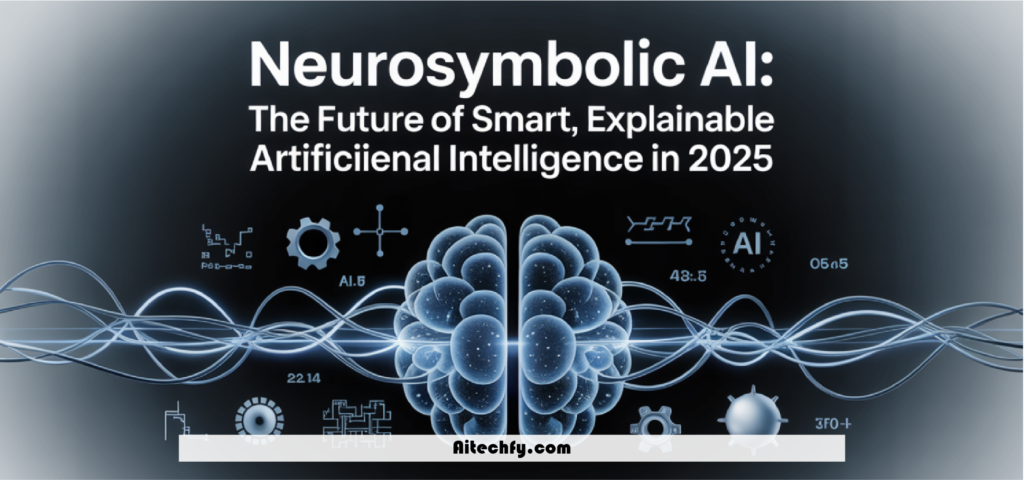
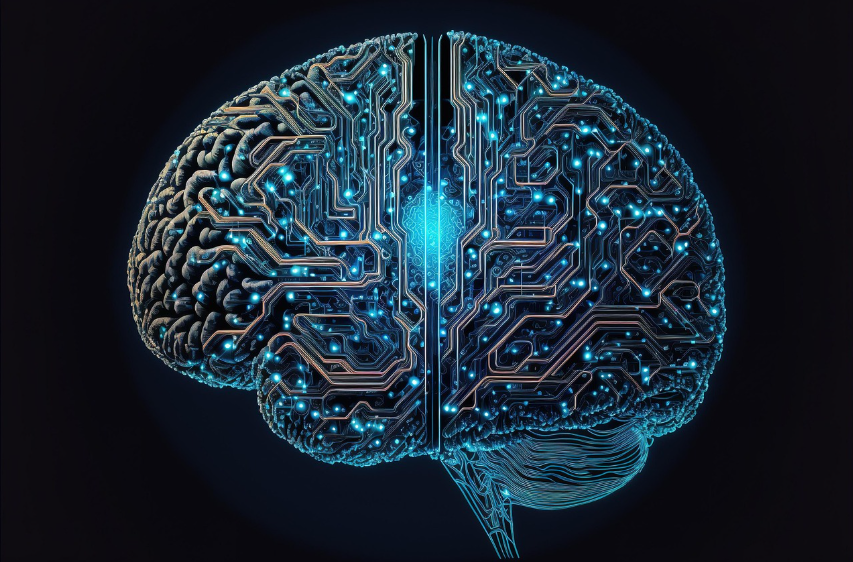
Neurosymbolic AI is a groundbreaking approach that merges two powerful AI paradigms. It combines neural networks (the learning engines) with neurosymbolic reasoning systems (the logical processors). Think of it as giving AI both intuition and logic.
Neurosymbolic AI mixes two innovative methods. One is neural networks. The other is rule-based symbolic thinking. This mix makes AI more accurate, clear, and sharp. It helps AI learn from large datasets. It also enables AI to explain its reasoning behind its decisions clearly.
Neural networks are good at spotting patterns. But they cannot explain how they think. Symbolic systems are good at logic. However, they cannot easily learn from raw data.
The Evolution of AI Approaches
AI has gone through different phases. We had symbolic AI first, then neural networks took over. Now we’re seeing the innovative combination of both approaches. We are currently in the third AI summer, characterized by significant advancements and commercialization, particularly in the integration of Symbolic AI and SubSymbolic AI, which is leading to the emergence of Neuro Symbolic AI.
This evolution makes sense. Why choose between learning and reasoning when you can have both?
What are the Main Features, and how do they interact with Each Other?
1. Neural Networks: The Pattern Recognition Powerhouse
Neural networks are the neural part of intelligent AI. They excel at learning from large datasets. They can find complex patterns. They work well with messy and unclear information. They can adjust to new situations.
But they have limits. They cannot explain how they make choices. This is called the black box problem. They are not good at logical thinking. They require a substantial amount of data to function effectively. They struggle to grasp abstract concepts.
2. Symbolic Systems: The Logic Engine
Symbolic systems are the logic part of intelligent AI. They excel at demonstrating explicit knowledge. They can think with logic and make clear choices. They also work well with profound and abstract ideas.
But they have limits. They cannot easily learn from raw data. They are not good at spotting patterns. They also struggle to grow with complex data.
How They Work Together
The real power lies in the synergy between the two systems. Neural networks find patterns in raw data. Symbolic systems utilize logic to comprehend these patterns. They share information during the process. This ensures that the final result is both correct and easy to explain.
Why NeuroSymbolic AI Matters in 2026
-
Addressing the Trust Crisis
AI systems today often make decisions we can’t understand. This creates trust issues, particularly in critical areas such as healthcare and finance. Neurosymbolic AI solves this by providing clear explanations for every decision.
-
Improved Accuracy and Precision
Most research focuses on learning and guessing. This takes up 63 percent. Logic and thinking get 35 percent. Showing knowledge gets 44 percent. Concentrating on learning and thinking enables AI to deliver better results in complex cases.
-
Path to Artificial General Intelligence (AGI)
IBM Research views neuro-symbolic AI as a pathway to achieving artificial general intelligence. By augmenting and combining the strengths of statistical AI, such as machine learning, with the capabilities of human-like symbolic knowledge and reasoning, we aim to create a revolution in AI, rather than an evolution.
In 2025, companies will gain real value from neuro-symbolic AI. It cuts bias by clear thinking. It helps follow rules. It builds customer trust. It lowers risk when using AI tools.

What Are the Real-World Applications in 2025?
Real-world applications of neurosymbolic AI in 2025:
|
Sector |
Use Case |
Benefits |
|
Healthcare |
Medical image analysis and diagnosis explanation | Clear diagnoses, protocol compliance, better doctor understanding |
|
Finance |
Credit scoring and decision-making |
Fair lending, legal compliance, reduced bias, clear customer feedback |
| Autonomous Cars | Object detection and traffic law reasoning |
Safer driving, explainable choices, smart route planning |
|
Customer Service |
Chatbots and warehouse robots (e.g., Rufus and Vulcan) |
Accurate replies, better context, clear suggestions, fewer wrong answers |
When these systems are used in real-world settings, they do more than function; they build trust, reduce errors, and help people understand AI-driven decisions. Let’s check the key benefits next.
What Are the Benefits of Neuro Symbolic AI?
1. Enhanced Explainability
The most significant advantage is transparency. Users can understand why the AI made specific decisions. This matters in health checks, money decisions, legal cases, and safety systems.
2. Better Accuracy
Combining learning and neuro symbolic reasoning improves accuracy. Neural outputs are verified using logic. Known facts help guide the learning process. Mistakes get corrected through reasoning. The system adapts intelligently to new situations.
3. Reduced Data Requirements
Symbolic knowledge fills gaps when data is limited. It allows faster setup in new areas. Small datasets still perform well. Training becomes more affordable while learning becomes quicker and smarter.
4. Improved Robustness
Neuro-symbolic systems are more resilient. They resist adversarial attacks. Bias in data affects them less. Edge cases are handled with better logic. Unexpected inputs do not easily break them.
What Are the Current Challenges in NeuroSymbolic AI?
Technical Complexity
Building neuro-symbolic AI is complex. It needs experts in both learning and logic systems. Joining both parts takes clever design. Debugging and balancing need advanced skills.
Performance Trade-offs
Neuro symbolic AI faces some technical issues. It may run slower than other systems. It requires more computer power to function correctly. It uses extra memory to store knowledge. Making it run better is also a complex task.
Limited Tools and Frameworks
The field of neuro-symbolic AI needs better support. It requires strong platforms to build systems. It needs clear and standard designs. It needs tools that are easy to use. It also needs complete and simple guides to help developers.
Market Adoption
Over 73% of organizations worldwide are either using or piloting AI in core functions. Meanwhile, public trust in AI is evolving: 56% of global citizens now believe that AI will have a positive impact on their lives in the next 10 years, although 68% also support increased regulation of AI systems.
Industry Applications
Major tech companies are investing heavily:
- Amazon: Warehouse robots and shopping assistants
- IBM: Research and development platforms
- Google: Integration with existing AI services
- Microsoft: Enterprise AI solutions
What Does the Future Hold for Neuro-Symbolic AI?
By 2026 and 2027, neurosymbolic AI will be easier to build. Tools will be simple. Designs will follow explicit rules. More companies will use it. Speed and power will get better.
New uses are growing fast. Science, schools, law, and factories are trying it. It aids in intelligent decision-making, clear learning, legal checks, and machine repair.
Money is flowing in. People want clear AI to bring better results and less risk.
Conclusion
Neurosymbolic AI is the next big step in innovative technology. It mixes learning tools with logic tools. This helps AI give correct answers and explain them clearly.
In 2025, many companies will use this brilliant mix. They want AI that is honest and easy to trust. More industries are using it. This shows it is not just for labs. It solves real problems in daily work.
The future will need AI that learns and thinks. It must evolve and justify its decisions. It must be smart and easy to trust. Neuro-symbolic AI gives all this in one strong tool.
Want to try neuro symbolic AI for your work? This new tech can improve your tasks and keep things clear for your team.