
Hiring and payroll are no longer the only areas in which Human Resource Departments focus.
Modern businesses now require significant amounts of data-driven decision making in order to enhance employee performance, minimize employee turnover, streamline the recruitment process and strengthen the workplace culture. This is why HR Analytical Tools have become an essential tool for businesses of all sizes.
HR Analytical Solutions provides companies with the ability to use raw employee data to extract meaningful business intelligence information. These solutions cover every stage of the employee life cycle, from workforce planning to measuring employee engagement.
Given the sheer number of HR Analytical Platforms available, choosing a platform can quickly become overwhelming.
Here we will provide you with a comparison of the 10 most popular HR Analytical Solutions based on Reporting Capabilities, Workforce Intelligence, Automation, Scalability, Usability, Integrations, and Overall Value in 2026.
What Are HR Analytics Tools?
HR analytics tools are programs that provide HR professionals and business owners with an easy-to-use method for collecting, analyzing, and visualizing various types of data related to employees.
The use of HR analytics allows HR professionals and business leaders to use data-driven insight to aid in their decision-making process, as opposed to relying on guesses or assumptions of what may happen in the future.
HR analytics tools provide insight into important areas such as employee engagement levels, how effective their hiring process is in regards to attracting new employees, employee productivity, retention rates, diversity and inclusion metrics, compensation trends, and overall company performance, among other things.
Additionally, many HR analytics programs have added artificial intelligence (AI) capabilities, predictive analytics, automated reporting, and workforce forecasting tools.
Because of the growing focus on data analytics, HR analytics software is becoming increasingly integrated into modern workforce management models.
Quick Comparison: Best HR Analytics Tools in 2026
| Tool | Best For | Key Feature | Pricing | Rating |
|---|---|---|---|---|
| Visier | Enterprise people analytics | Predictive analytics | Custom Pricing | 4.9/5 |
| Workday HCM | Large workforce management | Unified workforce management | Custom Pricing | 4.8/5 |
| BambooHR | Small and medium businesses | Simplicity | Custom Pricing | 4.7/5 |
| SAP SuccessFactors | Enterprise HR ecosystems | Workforce planning | Custom Pricing | 4.8/5 |
| ADP Workforce Now | Payroll + HR analytics | Payroll analytics | Custom Pricing | 4.7/5 |
| Tableau | HR data visualization | Data visualization | Custom Pricing | 4.8/5 |
| Power BI | Business intelligence reporting | Affordable BI reporting | Affordable | 4.8/5 |
| Qualtrics EmployeeXM | Employee experience analytics | Employee engagement | Custom Pricing | 4.7/5 |
| UKG Pro | Workforce optimization | Workforce optimization | Custom Pricing | 4.7/5 |
| Rippling | HR + IT automation | Automation | Custom Pricing | 4.8/5 |
Types of HR Analytics Tools
Every business is going to have different types of HR analytical criteria.
Some are going to put higher priority on employee engagement analytics than others who may put emphasis on workforce planning and reporting or performance measurements as well as utilizing analytics for predictive modelling.
Based on known analytic categories, businesses will be able to determine which HR systems may be best for how they operate more efficiently and quicker.
People Analytics
Employee analytics solutions concentrate on identifying how workers perform, behave, and contribute to company goals. Employee analytics tools, furthermore, provide insight into the way employees collaborate with others in an organization across different departments.
In addition, many of these more sophisticated employee analytic tools provide predictive insights that allow HR or human resource teams to
identify potential challenges, such as burnout or retention, as well as productivity issues before those problems become more severe.
Visier and Workday are both companies that excel in this area.
Workforce Planning
Organizations use workforce planning tools to assist them in determining future hiring requirements, ease and efficiently managing a staffing roster, maximize the allocation of all resources and will assist with forecasting future workforce needs.
Fast-growing businesses as well as larger scale businesses with large employee populations will benefit tremendously from the use of these tools.
Workforce planning tools will provide HR leaders with the necessary information to make long-term, strategic business decisions based on historical workforce data and predictive workforce modelling tools.
The SAP SuccessFactors and UKG Pro workforce planning tools will be among the top-rated solutions for the year 2026.
Employee Engagement
Platforms for engagement usually assess employee satisfaction, workplace sentiment, feedback, and company culture.
Employee engagement platforms assist with measuring employee satisfaction levels and providing businesses the ability to pick up on issues with employee engagement early, so they can take steps to enhance employee retention.
Many of today’s engagement platforms utilize survey techniques, artificial intelligence based tools to analyze employee sentiment provide businesses real-time feedback making them good ways to gain more comprehensive insights into the behaviors and feelings of one’s workforce.
Qualtrics’ EmployeeXM is a true leader in this arena.
BI & Reporting
Using business intelligence and reporting tools, HR teams can see how their workforce is performing through the use of dashboard displays of data, charts, and analytic reports. For organizations that require the ability to create their own reports and analyze their workforce across
all departments, these tools provide a valuable resource.
Two of the most popular BI platforms in the marketplace today for HR reporting are Power BI and Tableau.
Best HR Analytics Tools in 2026
1. Visier
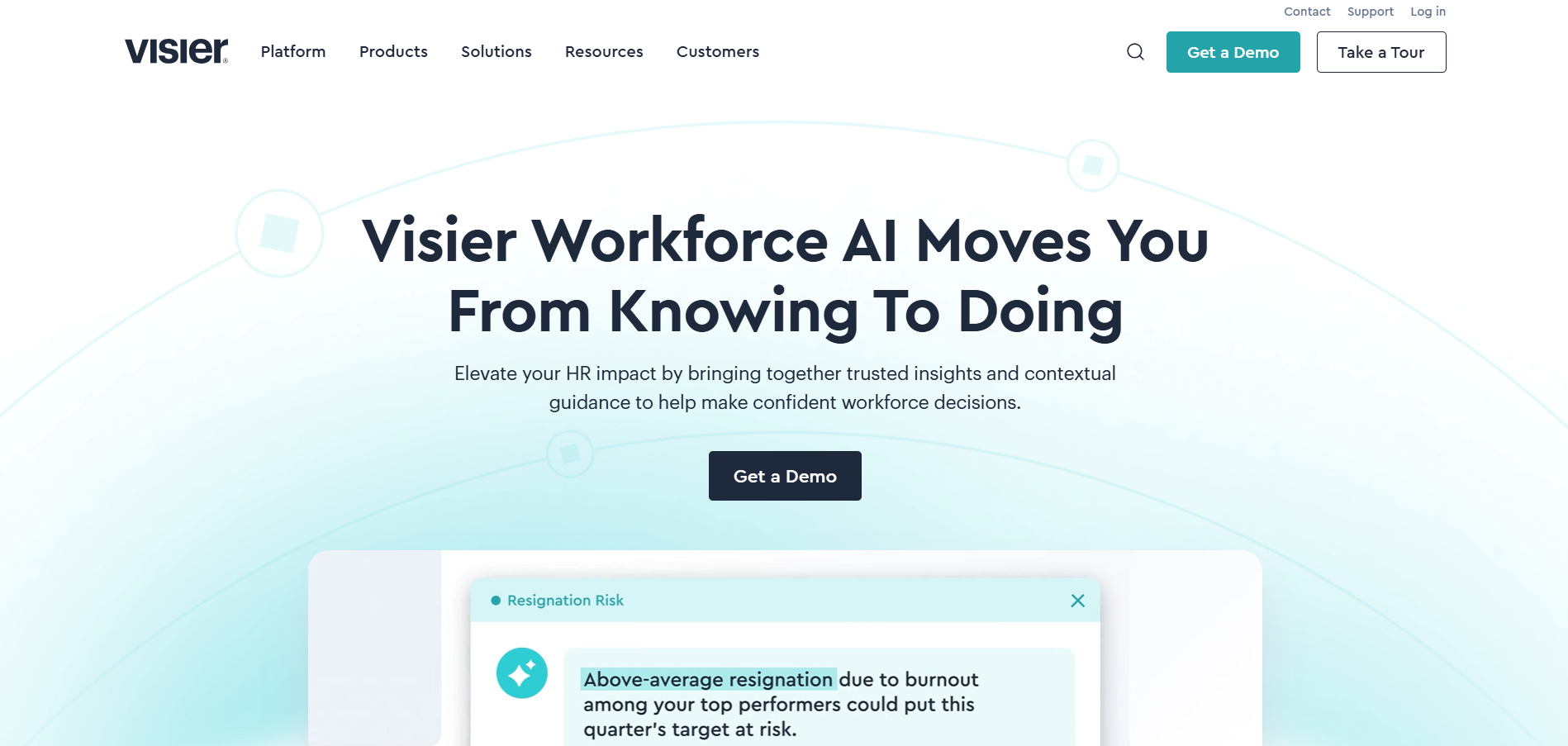
One of the top features of Visier is its ability to transform complicated data about employee populations into easy-to-understand, highly visual representations that managers can act upon. Large corporations will gain tremendous value from Visier’s advanced workforce forecasting capabilities and AI-based analytics capabilities.
2. Workday HCM
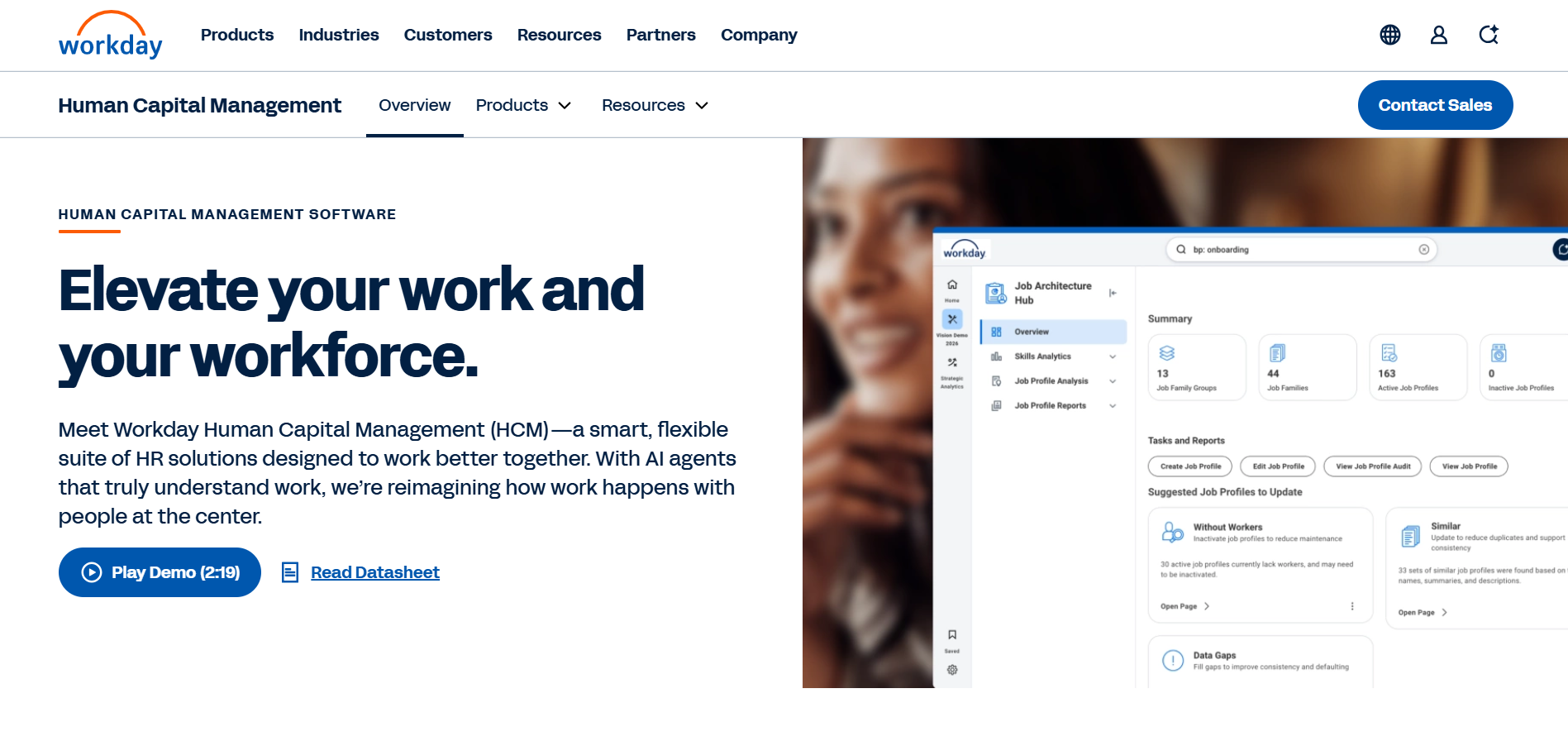
Workday HCM will continue to be an extremely powerful HR enterprise management solution in 2026. Its analytical capabilities will go much farther than standard HR reporting. Enterprises will be able to evaluate and track workforce trends, employee performance and compensation, hiring data, and talent management data all from a single ecosystem. Enterprise customers will benefit most from Workday due to the need for integrated HR, payroll, finance, and workforce analytical data available on one platform.
3. BambooHR
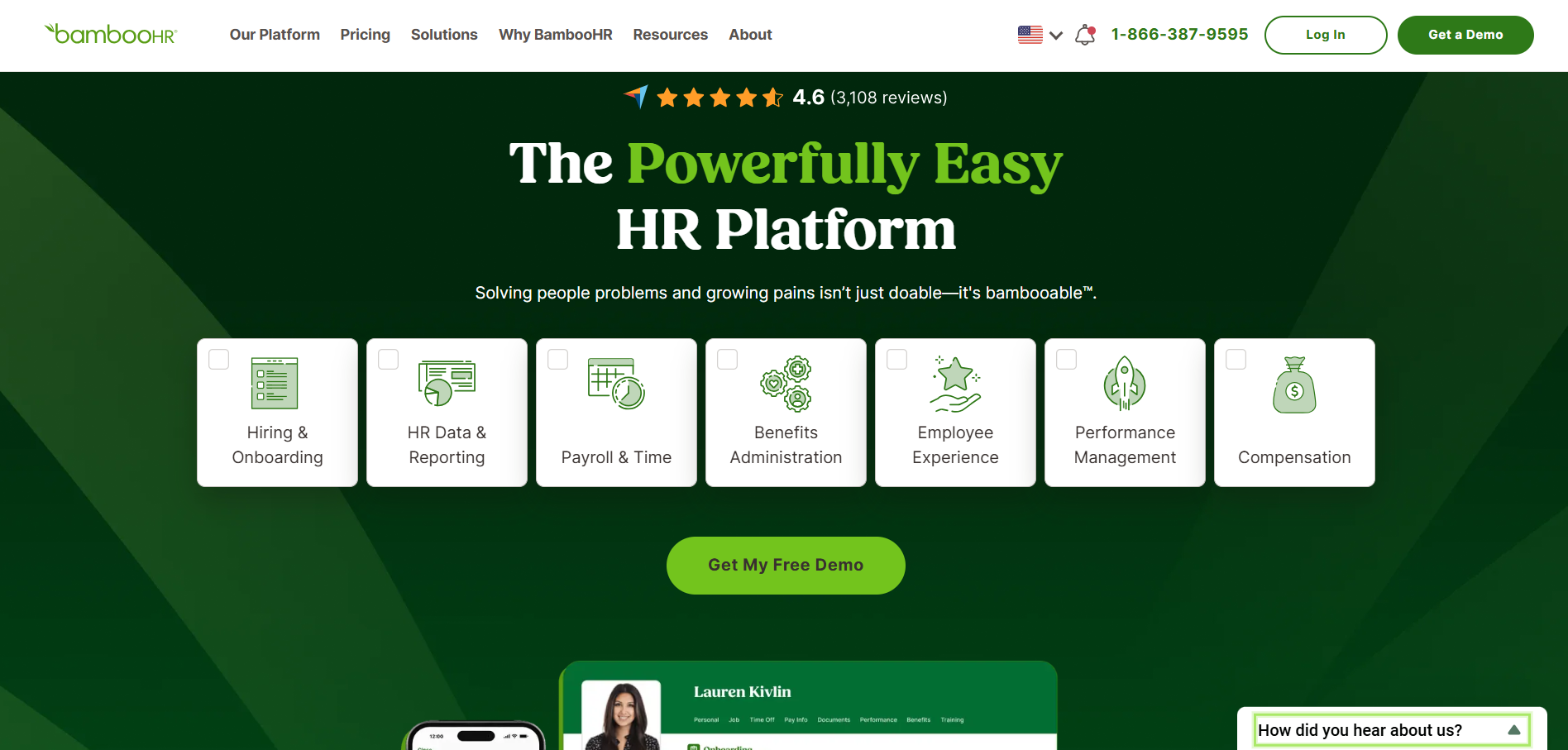
BambooHR is an excellent choice for HR analytics tools for small businesses and great for companies with up to 500 employees.
BambooHR has a clean user interface and is simple to learn and/or implement.
BambooHR provides employee reporting, hiring analytics, workforce insights, onboarding tracking, and many other tools and functionality that assist in HR management and help improve employee performance.
If you are a growing business and are interested in implementing an HR analytics tool that is simple and effective and does not include the complexities that enterprise-level tools often have, this could be a great option for your organization.
4. SAP SuccessFactors
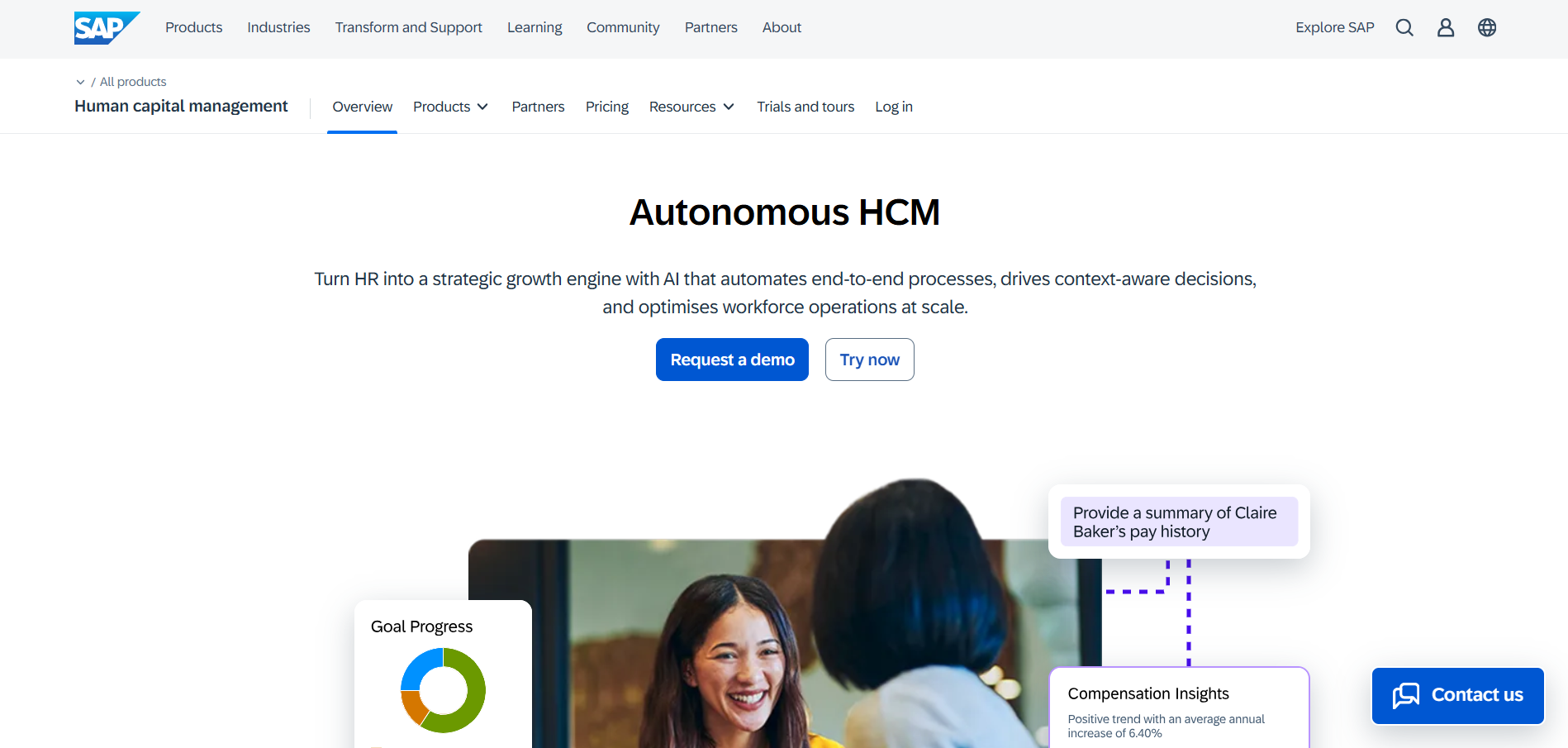
SAP SuccessFactors is a full HR management solution and workforce analytics system, which can be used in an enterprise environment. It has advanced features such as workforce planning, talent analytics, measuring employee performance, and reporting at different levels of the organisation.
Global companies with a large employee base typically prefer SAP SuccessFactors due to its ability to scale as well as the ease with which it can work with other systems. The predictive functionality of its workforce analytics capabilities provide significantly high levels of support for both short and long-term strategic HR planning.
5. ADP Workforce Now
ADP Workforce Now integrates payroll with other functions like workforce management & HR analytics as one complete system.
The system has extensive capabilities for providing reports on different aspects of the workforce, including attendance & payroll, compensation, and HR information about employees and their positions.
In general, if you already rely on the ADP payroll process, this will be a good benefit of having ADP’s analytics ecosystem integrated with all your current payroll operations.
Finally, it works exceptionally well for those mid-sized companies that use ADP’s payroll service.
6. Tableau
While Tableau is not specifically designed for use in the Human Resources (HR) field, it continues to be a leader among the top data visualization tools available to businesses to create more sophisticated work-related dashboards and reports than any other business intelligence software today.
This makes Tableau a vital asset to any data-driven organization with its ability to turn complicated HR data into visually interactive reports of these HR results.
HR departments can use Tableau to create and display visual trends, such as retention rates, hiring, diversity or minority statistics, employee job performance, etc.
7. Microsoft Power BI
Globally, Microsoft’s Power BI has a large user base from business intelligence platforms. Its reporting, dashboards, and workforce analytics capabilities are well-built and very cost-effective. Many organizations that use the Microsoft ecosystem (e.g., Excel, Teams, and any of the Azure platforms) choose Power BI simply because it can integrate into those systems; this makes Power BI a very effective solution for HR reporting for any organization already using Microsoft infrastructure.
8. Qualtrics EmployeeXM
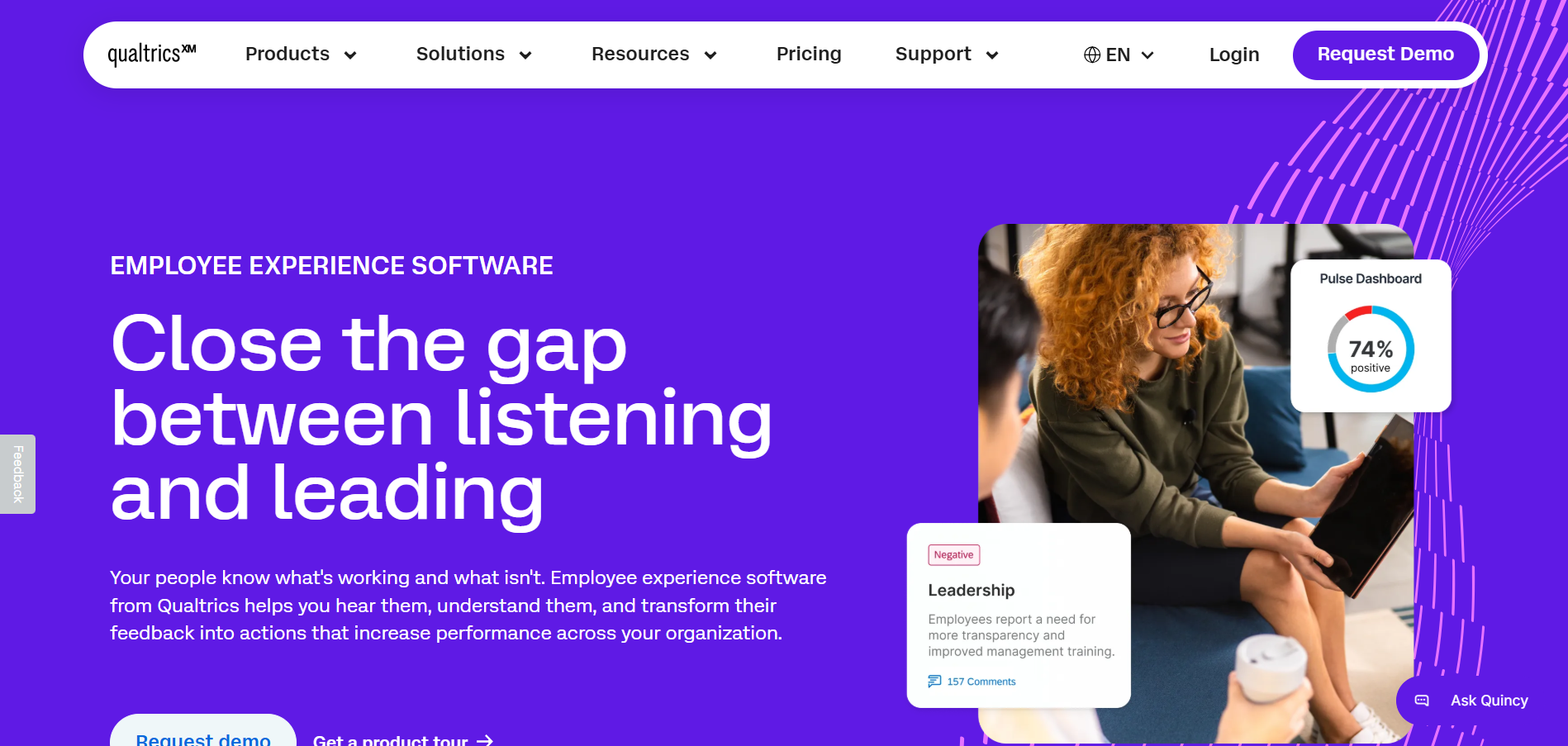
The QualtricsEmployeeXM platform provides a functional approach to assessing employee engagement and experience analytics by providing organizations with the tools to measure employee satisfaction, workplace sentiment, cultural health and engagement trends.
With the help of its AI-assisted sentiment analysis tools Qualtrics can give companies a greater understanding and insight into employee feedback and organizational morale.
Organizations that are working to improve their workplace culture and retention will often find that they will greatly benefit from using Qualtrics.
9. UKG Pro
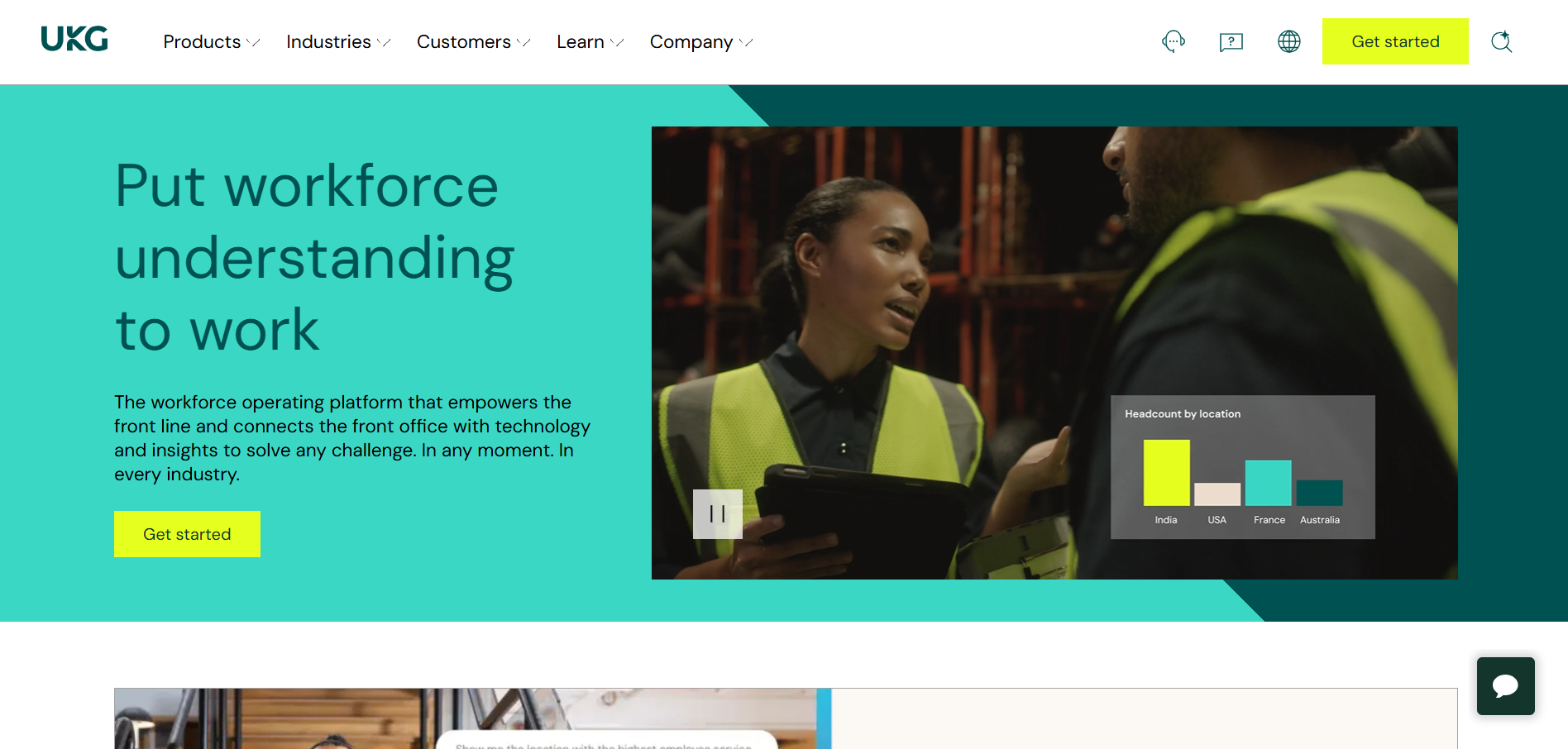
UKG Pro contains excellent capabilities for enterprise businesses’ human resources (HR) analytics and workforce management.
In addition to HR analytics, the platform has support for:
- Workforce Planning
- Attendance Management
- Employee Analytics
- Payroll Reporting
- Talent Management
The analytics tools of UKG Pro allow organizations to optimize their staffing efficiency and workforce productivity.
Organisations that have large hourly employees will find that UKG Pro performs especially well to meet their needs in terms of managing their workforce through the above mentioned areas.
10. Rippling
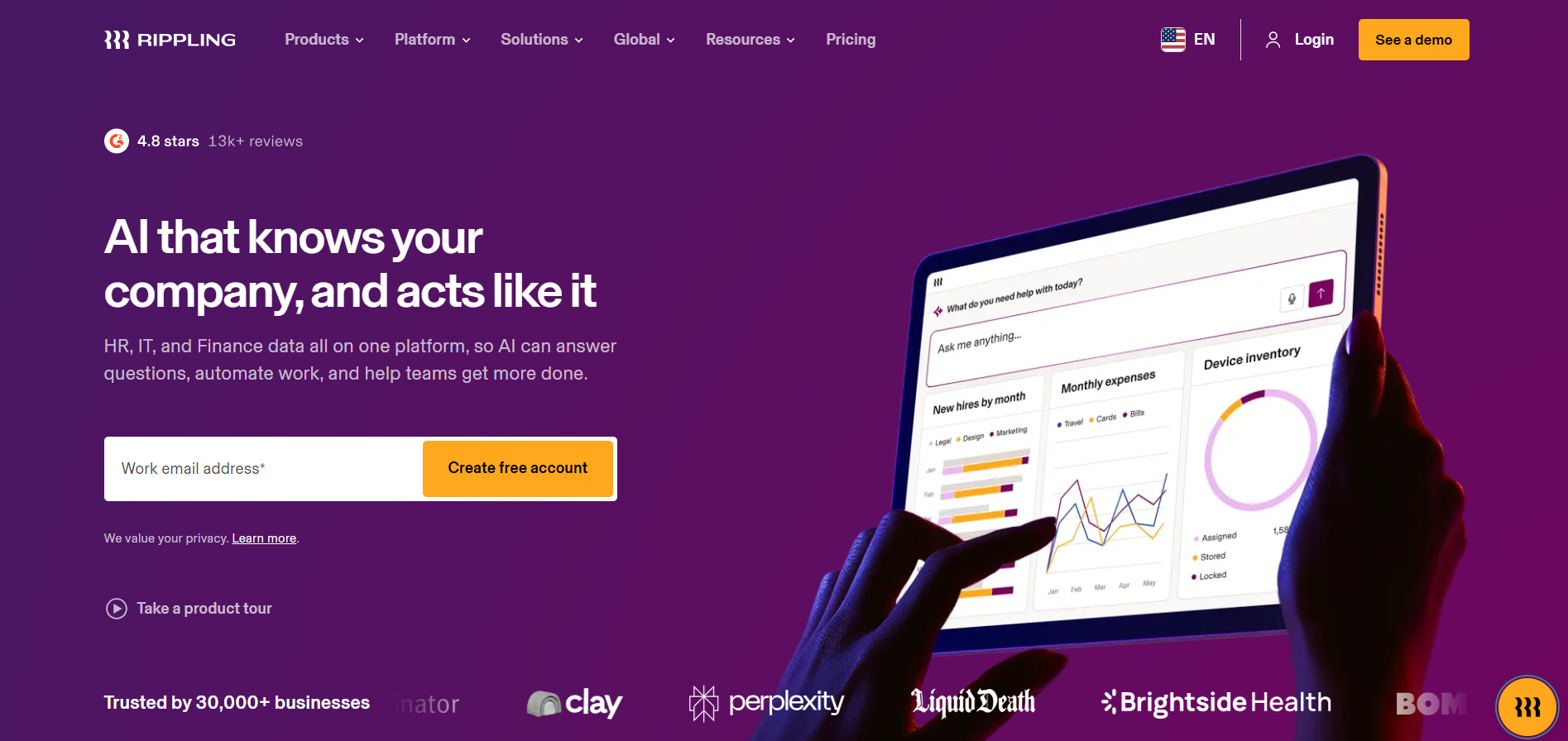
Through automation, businesses can automate employee hiring, managing equipment, managing software, and generating reports, all from one central location.
For modern companies and start-up companies, Rippling offers an expansive experience of managing your company’s operations.
Related: 10 Best HR Automation Software to Save Time and Money
How to Choose an HR Analytics Tool
Selecting an appropriate HR analytics platform is highly dependent on multiple factors including the size of the organization, complexity of the workforce and type of business goals. For example, small organizations tend to value simple and cost-effective methods which are easy to use (examples of these types of platforms include BambooHR and Rippling), while larger organizations are often looking for more sophisticated ways to forecast their workforce, use AI predictive analytics, manage compliance and deep reporting capabilities (examples of platforms that would work well for larger corporations include Visier, Workday and SAP SuccessFactors).
It should also be noted that integration capabilities between systems (e.g., integration between HR Analytics Platform and payroll processing system, collaboration tools, recruitment software and current business intelligence system) are highly important.
Lastly, platforms should be scalable; if an HR Analytics Platform used by an organization with 100 employees is then used by the same company with an increased employee base in the future, can that same platform adequately support that vastly larger workforce?
Final Thoughts
HR analytics have advanced past merely tracking how well workers perform at their jobs. Businesses must utilize available analytics from their workforce to make better hires, create a more engaged workforce, implement better retention strategies, and improve the overall efficiency of their operations. In order to accomplish this goal, HR analytics tools must be able to turn workforce data into actionable insights for the business.
Whether starting a business and implementing basic workforce reporting or an established organization looking to use predictive analytics in HR, there are significant impacts on the future success of an organization when choosing the proper software for an organization.
As we continue into 2026 and the trend of data-driven companies grows, HR analytics software will continue to play a critical role in the overall business strategy moving forward.