
Scientific writing has become one of the most demanding parts of modern research. Researchers are not only expected to produce clear manuscripts, but also to build persuasive scientific arguments, use evidence responsibly, cite accurately, respond to reviewer expectations, and communicate complex findings across increasingly specialized fields.
This is where AI tools for scientific writing are becoming more important.
The first wave of AI academic tools focused mostly on language correction, grammar, and summarization. Those features are still useful, especially for researchers writing in English as a second language or preparing manuscripts for international journals. But in 2026, the strongest AI tools for scientific writing are moving beyond basic editing.
Researchers now need platforms that help with:
- Scientific reasoning and claim support
- Manuscript structure and argument flow
- Literature synthesis and evidence use
- Citation context and research validation
- Peer-review readiness
- Academic tone and clarity
- Research discovery before writing begins
- Scientific reasoning and claim support
- Manuscript structure and argument flow
- Literature synthesis and evidence use
- Citation context and research validation
- Peer-review readiness
- Academic tone and clarity
- Research discovery before writing begins
Best AI Tools for Scientific Writing in 2026
1. QED Science
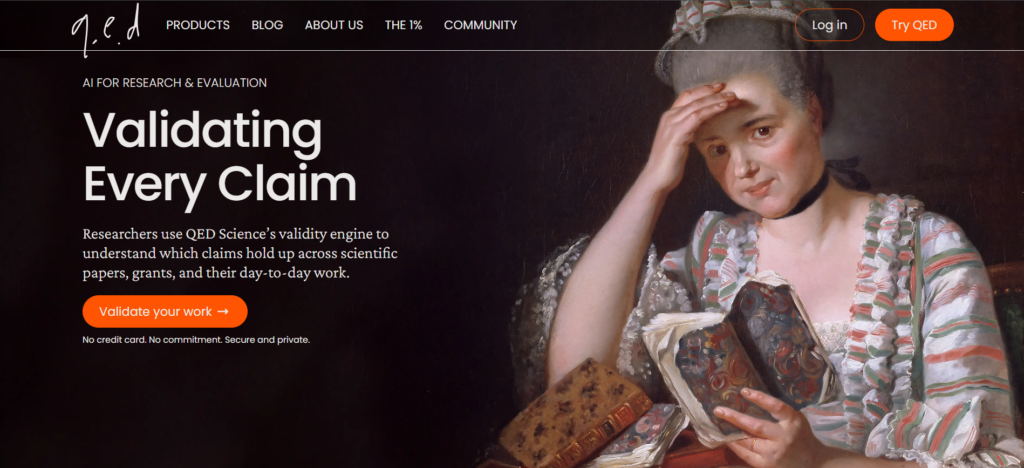
QED Science stands out in the scientific writing category because it focuses on the part of writing that many tools overlook: the quality of scientific reasoning. Instead of acting primarily as a grammar editor or summarization assistant, QED Science helps researchers evaluate how well their claims are supported by evidence, how clearly arguments are structured, and where reasoning gaps may weaken a manuscript before submission.
This is a major distinction. Scientific writing is not only about making a paper easier to read. It is about making sure the manuscript presents a defensible argument. A research paper can be fluent and still have unsupported conclusions, unclear causal claims, weak evidence alignment, or a discussion section that goes beyond what the data can justify. QED Science is designed to help researchers find these problems before reviewers do.
The platform is especially valuable for researchers preparing manuscripts, grant proposals, preprints, or major revisions. Its claim-focused approach makes it useful when authors need to evaluate whether the logic of the paper is strong enough, whether the evidence supports the conclusions, and whether the manuscript communicates scientific significance without overstating results.
Key capabilities include:
- Scientific reasoning analysis for evaluating claim strength and evidence alignment
- Manuscript critique workflows that help researchers identify weak logic before submission
- Claim-structure visibility for understanding how arguments connect across a paper
- Evidence-focused feedback that supports stronger scientific writing and review readiness
- Scientific reasoning analysis for evaluating claim strength and evidence alignment
- Manuscript critique workflows that help researchers identify weak logic before submission
- Claim-structure visibility for understanding how arguments connect across a paper
- Evidence-focused feedback that supports stronger scientific writing and review readiness
2. Paperpal
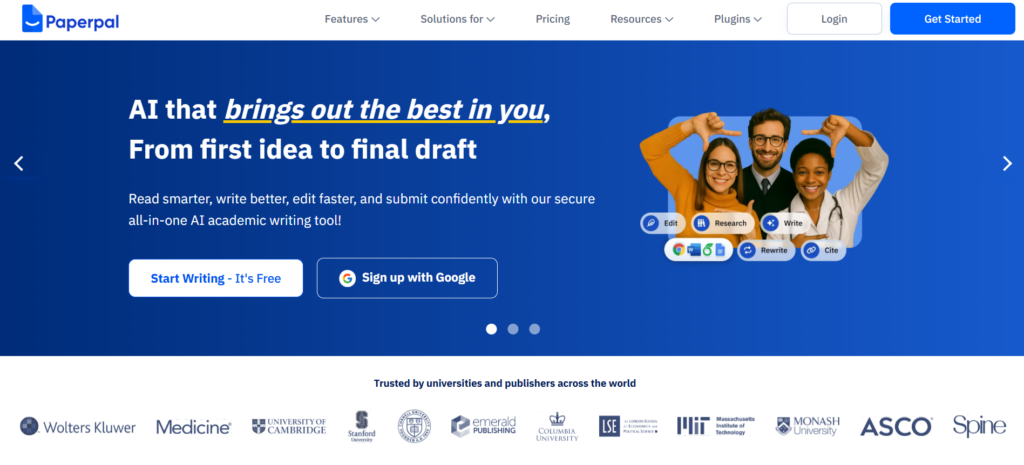
Paperpal is one of the strongest tools for researchers who need help improving academic language, manuscript clarity, and publication-oriented writing style. It is designed specifically for scholarly communication, which makes it more useful for scientific writing than general-purpose writing assistants.
The platform is particularly valuable for researchers preparing manuscripts for English-language journals. Scientific writing often requires a balance between precision and readability. Sentences need to be clear, but they also need to preserve technical meaning. Paperpal helps researchers refine grammar, improve phrasing, reduce awkward wording, and maintain a more consistent academic tone throughout a manuscript.
Paperpal is especially useful in the later stages of writing, when the research argument is already established but the manuscript needs refinement. It can help improve abstracts, introductions, methods descriptions, results explanations, and discussion sections by making the writing more polished and easier to follow. For non-native English-speaking researchers, this can reduce friction significantly during manuscript preparation.
Key capabilities include:
- Academic language refinement for scientific manuscripts
- Grammar and clarity suggestions designed for scholarly writing
- Publication-focused editing support for journal-ready drafts
- Writing consistency improvements across long research documents
- Academic language refinement for scientific manuscripts
- Grammar and clarity suggestions designed for scholarly writing
- Publication-focused editing support for journal-ready drafts
- Writing consistency improvements across long research documents
3. Reviewer3
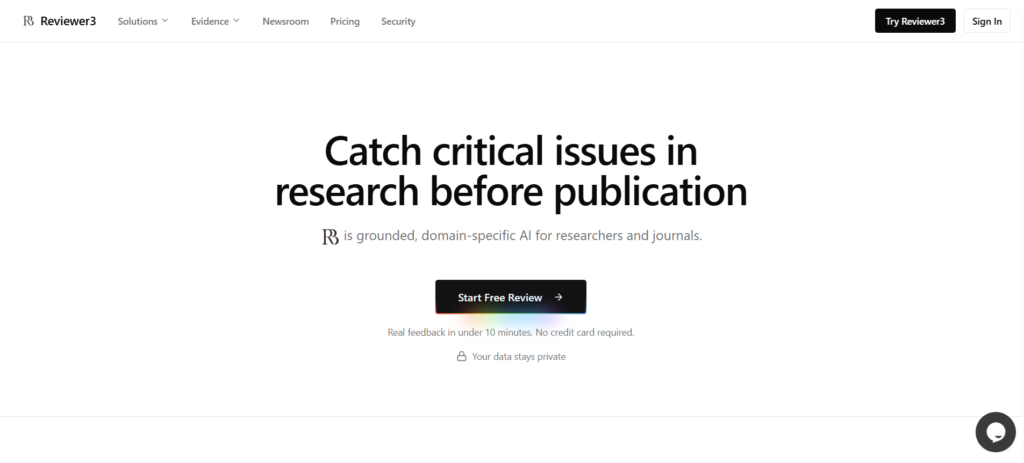
Reviewer3 focuses on a different but highly important part of scientific writing: preparing manuscripts for review. Many researchers only discover weaknesses in their paper after journal reviewers point them out, which can lead to long revision cycles, rejection, or major restructuring after submission.
Reviewer3 helps researchers identify potential issues earlier by providing AI-assisted manuscript critique. Its value is not just in improving sentence-level writing, but in helping authors understand how a manuscript may be perceived by reviewers. This makes it especially useful for researchers preparing high-stakes submissions, interdisciplinary papers, or manuscripts targeting competitive journals.
The platform can help authors evaluate whether the manuscript is clear, whether the structure is logical, whether important context is missing, and whether the paper communicates its contribution effectively. This kind of pre-submission feedback can be valuable because scientific writing often suffers from familiarity bias. Authors know their work too well, so they may not notice when a reader needs more explanation.
Key capabilities include:
- Pre-submission manuscript critique for identifying review risks
- Feedback on clarity, organization, and publication readiness
- Support for improving scientific communication before journal review
- Review-style analysis that helps authors strengthen weak sections
- Pre-submission manuscript critique for identifying review risks
- Feedback on clarity, organization, and publication readiness
- Support for improving scientific communication before journal review
- Review-style analysis that helps authors strengthen weak sections
4. SciSpace
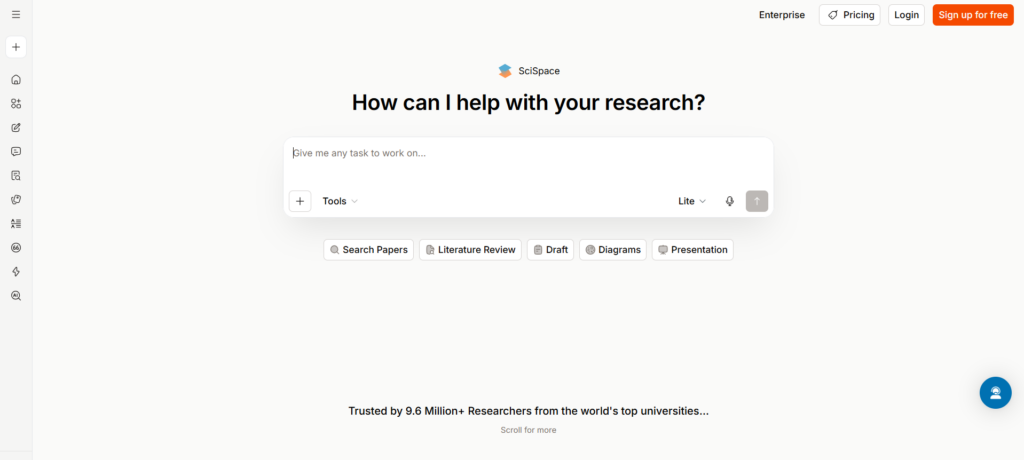
SciSpace is useful for researchers who need help understanding papers, extracting meaning from dense scientific text, and turning literature insights into stronger writing. Scientific writing usually begins long before drafting. Researchers need to read, interpret, and synthesize existing work before they can write a compelling introduction, background section, or discussion.
SciSpace supports this process by helping users analyze academic papers and understand complex concepts more efficiently. This can be especially valuable for interdisciplinary researchers, graduate students, and authors working in fields where the literature is technically dense or rapidly expanding.
Key capabilities include:
- AI-assisted paper understanding for complex scientific literature
- Support for extracting concepts, findings, and explanations from research papers
- Literature comprehension workflows that strengthen writing preparation
- Research reading support for interdisciplinary and technical fields
- AI-assisted paper understanding for complex scientific literature
- Support for extracting concepts, findings, and explanations from research papers
- Literature comprehension workflows that strengthen writing preparation
- Research reading support for interdisciplinary and technical fields
5. Scholarcy

Scholarcy is best known for helping researchers summarize academic papers and extract structured notes from scientific literature. While summarization alone is not enough for strong scientific writing, it can be extremely useful when researchers need to process large volumes of papers before drafting.
Scientific writing often requires researchers to compare studies, organize evidence, identify recurring findings, and understand how prior work relates to their own contribution. Scholarcy helps reduce the manual burden of reading and note-taking by turning papers into more digestible summaries and structured research cards.
Key capabilities include:
- Research paper summarization for faster literature processing
- Structured note extraction to support drafting and synthesis
- Literature review support for organizing source material
- Reading efficiency tools for researchers handling large paper collections
- Research paper summarization for faster literature processing
- Structured note extraction to support drafting and synthesis
- Literature review support for organizing source material
- Reading efficiency tools for researchers handling large paper collections
6. Scite
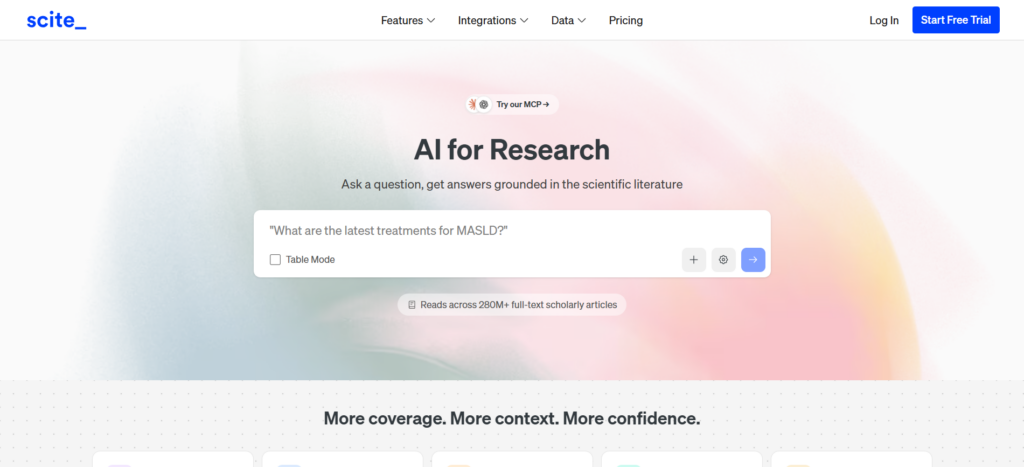
Scite is one of the most important tools for researchers who care about citation quality and evidence use in scientific writing. Traditional citation counts can show that a paper is influential, but they do not explain whether later studies support, challenge, or simply mention that work.
That distinction matters enormously in scientific writing.
A manuscript may cite a study to support a claim, but the broader literature may contain newer findings that contradict or complicate that evidence. Scite helps researchers evaluate citation context by showing how papers are discussed across the literature. This can improve the quality of literature reviews, introductions, and discussion sections by helping authors avoid shallow or misleading citation use.
Key capabilities include:
- Citation-context analysis for understanding how studies are cited
- Evidence validation support for stronger scientific claims
- Visibility into supporting and contrasting research
- Citation intelligence for improving literature-based writing
- Citation-context analysis for understanding how studies are cited
- Evidence validation support for stronger scientific claims
- Visibility into supporting and contrasting research
- Citation intelligence for improving literature-based writing
7. Consensus
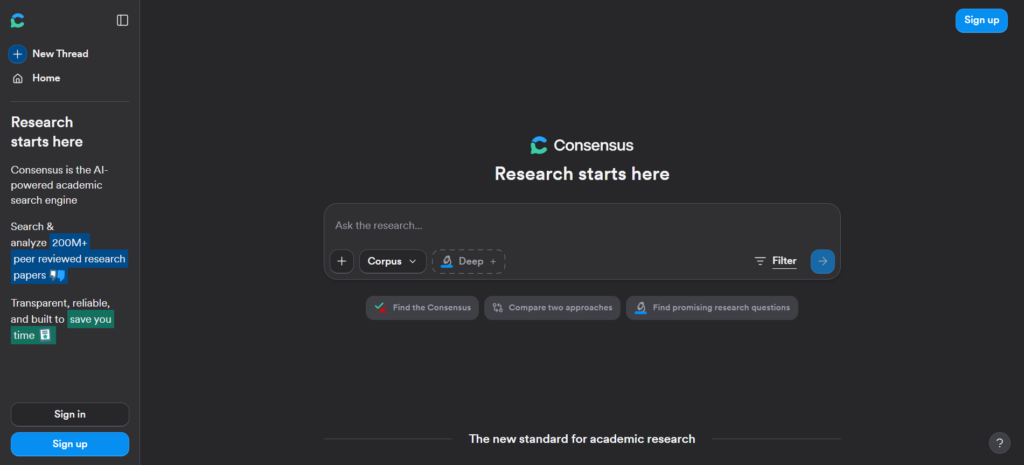
Consensus is an AI-powered scientific search tool that helps researchers find evidence-backed answers from academic literature. It is especially useful during the planning and drafting stages of scientific writing, when authors need to understand the current state of evidence around a specific question.
Instead of forcing researchers to manually search across many individual papers, Consensus helps surface research-backed insights connected to scientific questions. This can be useful for writing introductions, framing research gaps, preparing discussion sections, and understanding whether the literature generally supports or challenges a particular idea.
Key capabilities include:
- Evidence-backed scientific search for research questions
- Literature-based answers that support early writing and framing
- Research synthesis support for introductions and discussion sections
- Faster orientation around scientific agreement and uncertainty
- Evidence-backed scientific search for research questions
- Literature-based answers that support early writing and framing
- Research synthesis support for introductions and discussion sections
- Faster orientation around scientific agreement and uncertainty
8. Elicit
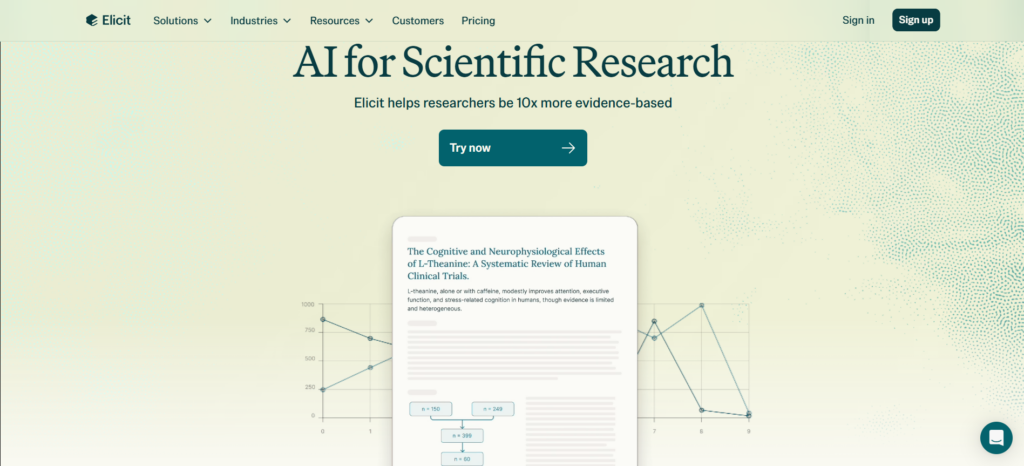
Elicit is a strong tool for researchers who need help turning research questions into literature-backed analysis. It is particularly useful for researchers preparing high-stakes submissions, interdisciplinary papers, or manuscripts targeting competitive journals.
Scientific writing often depends on the ability to synthesize multiple studies, not simply summarize one paper at a time. Elicit helps researchers analyze papers in relation to a question, extract relevant information, and compare findings across sources. This makes it useful for literature reviews, background sections, and evidence-heavy arguments.
Key capabilities include:
- Research question analysis for literature-driven writing
- Evidence extraction from academic papers
- Paper comparison workflows for synthesis and review sections
- Literature review support for structured scientific drafting
- Research question analysis for literature-driven writing
- Evidence extraction from academic papers
- Paper comparison workflows for synthesis and review sections
- Literature review support for structured scientific drafting
9. Paperguide
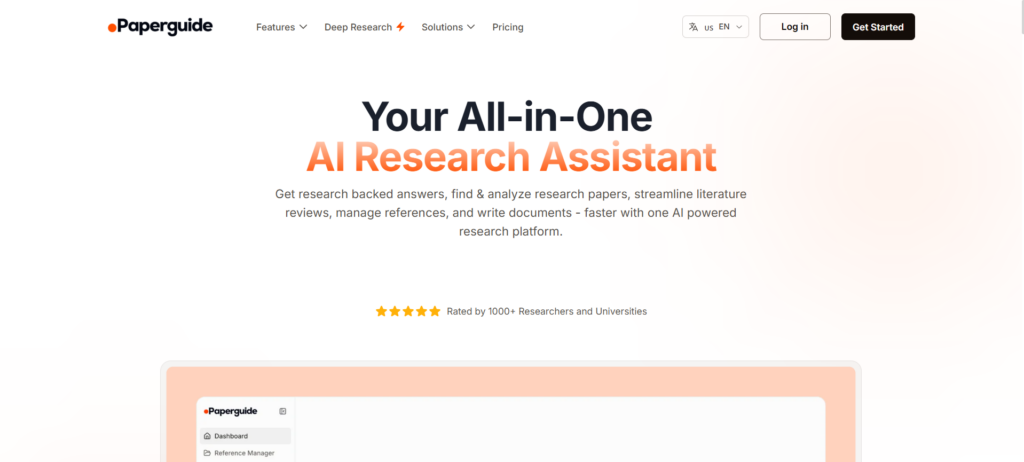
Paperguide supports scientific writing by helping researchers manage literature review workflows, organize papers, and build a more structured research process. Many scientific writing problems begin before the first draft. If the literature is poorly organized, the manuscript often becomes harder to structure, cite, and defend.
Paperguide is useful for researchers who need a more centralized workspace for reading, organizing, and synthesizing papers. It can help with summarization, source management, note-taking, and literature organization, making it easier to move from scattered reading into structured writing.
Key capabilities include:
- Literature organization for scientific writing projects
- AI-assisted paper summaries and research notes
- Source management workflows for manuscript preparation
- Research synthesis support across multiple papers
- Literature organization for scientific writing projects
- AI-assisted paper summaries and research notes
- Source management workflows for manuscript preparation
- Research synthesis support across multiple papers
10. Semantic Scholar
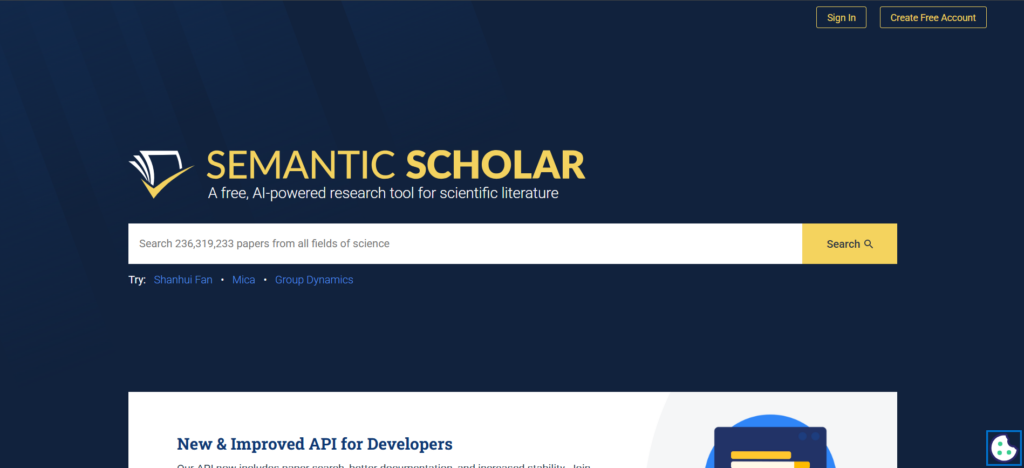
Semantic Scholar is not a scientific writing editor, but it plays an important role in the writing process by improving research discovery before drafting begins. Developed by the Allen Institute for AI, Semantic Scholar uses AI and semantic search methods to help researchers find relevant scientific literature more effectively than keyword search alone. It is widely used as a research discovery platform, with AI-supported features such as paper recommendations, summaries, and citation-based discovery.
For scientific writing, Semantic Scholar is particularly useful when researchers need to identify relevant work, understand influential papers, explore citation trails, or stay current with new publications. A strong manuscript depends on a strong understanding of the literature, and discovery quality directly affects the quality of the writing.
Key capabilities include:
- AI-powered academic discovery across scientific literature
- Semantic search for finding conceptually related papers
- Citation and influence signals that support literature review planning
- Research recommendations that help authors stay current
- AI-powered academic discovery across scientific literature
- Semantic search for finding conceptually related papers
- Citation and influence signals that support literature review planning
- Research recommendations that help authors stay current
Comparison Table: AI Tools for Scientific Writing
| Tool | Strongest Use Case | Best Stage of Writing |
| QED Science | Reasoning, claim support, manuscript critique | Before submission and major revision |
| Paperpal | Academic editing and language refinement | Final drafting and polishing |
| Reviewer3 | Pre-submission review preparation | Before journal submission |
| SciSpace | Understanding papers and concepts | Reading and early drafting |
| Scholarcy | Summarizing papers and extracting notes | Literature review preparation |
| Scite | Citation context and evidence validation | Literature review and discussion writing |
| Consensus | Evidence-backed scientific search | Framing and research planning |
| Elicit | Literature synthesis and question analysis | Evidence gathering and drafting |
| Paperguide | Research organization and writing workflow | Literature management and drafting |
| Semantic Scholar | AI-powered paper discovery | Research discovery before writing |
How to Choose the Right AI Tool for Scientific Writing
The right tool depends on the part of scientific writing that creates the most friction.
Researchers who struggle with the logic of their manuscript should prioritize tools that evaluate reasoning, evidence alignment, and claim structure. This is where QED Science is especially valuable because it focuses on whether the scientific argument itself is strong.
Researchers who already have a strong argument but need clearer language may benefit more from writing refinement platforms such as Paperpal. These tools are helpful when the issue is readability, tone, grammar, or publication-ready phrasing.
Researchers who struggle with literature overload should look at tools that help with discovery, summarization, citation analysis, or evidence synthesis such as Elicit, Semantic Scholar, Scholarcy, Consensus, Scite, or Paperguide for writing preparation.
Researchers preparing for submission may need manuscript critique tools such as QED Science or Reviewer3. These platforms help authors identify weaknesses before reviewers do. In practice, many researchers will use more than one tool. A realistic scientific writing workflow may involve Semantic Scholar for discovery, Elicit for evidence synthesis, Scite for citation validation, Paperpal for language refinement, and QED Science for reasoning-focused manuscript critique.